
Unlocking the Bio-CNG potential of sewage treatment plants
India’s transition towards cleaner energy is creating a powerful opportunity at the intersection of wastewater treatment, renewable energy and the circular economy. Compressed Bio-Gas from wastewater treatment offers a practical way to convert sewage sludge into a renewable fuel while recovering value from a resource traditionally treated as waste.
What if the waste treated every day could also become a dependable source of clean energy?
What Is Bio-CNG and Why Does It Matter?
Biogas is produced when biodegradable organic matter breaks down in the absence of oxygen through anaerobic digestion. Raw biogas typically contains 55-65% methane, with carbon dioxide and small quantities of hydrogen sulphide, moisture and other impurities.
Through purification and upgrading, the methane concentration can be increased to as much as 98%. The upgraded gas is then compressed to produce Bio-CNG, also known as Compressed Bio-Gas or CBG, for use in transport, industrial energy applications or gas networks, subject to applicable specifications.
Bio-CNG is therefore more than an alternative fuel. It connects waste management, methane recovery, renewable energy generation and fossil-fuel substitution within a single circular solution.
Why Sewage Treatment Plants Offer a Major Opportunity
Sewage treatment plants are well placed to support Bio-CNG production in India because they generate a continuous stream of sludge containing biodegradable organic matter. Anaerobic digestion of sewage sludge converts part of this organic content into biogas, which can then be upgraded rather than used only for heat or electricity.
The scale of the opportunity is increasing with urbanisation. NITI Aayog estimates that India’s urban population could reach about 883 million by 2050, with wastewater generation rising to nearly 1.3 lakh MLD. This growing volume strengthens the case for treating wastewater infrastructure not only as a sanitation necessity, but also as a platform for resource recovery from wastewater.
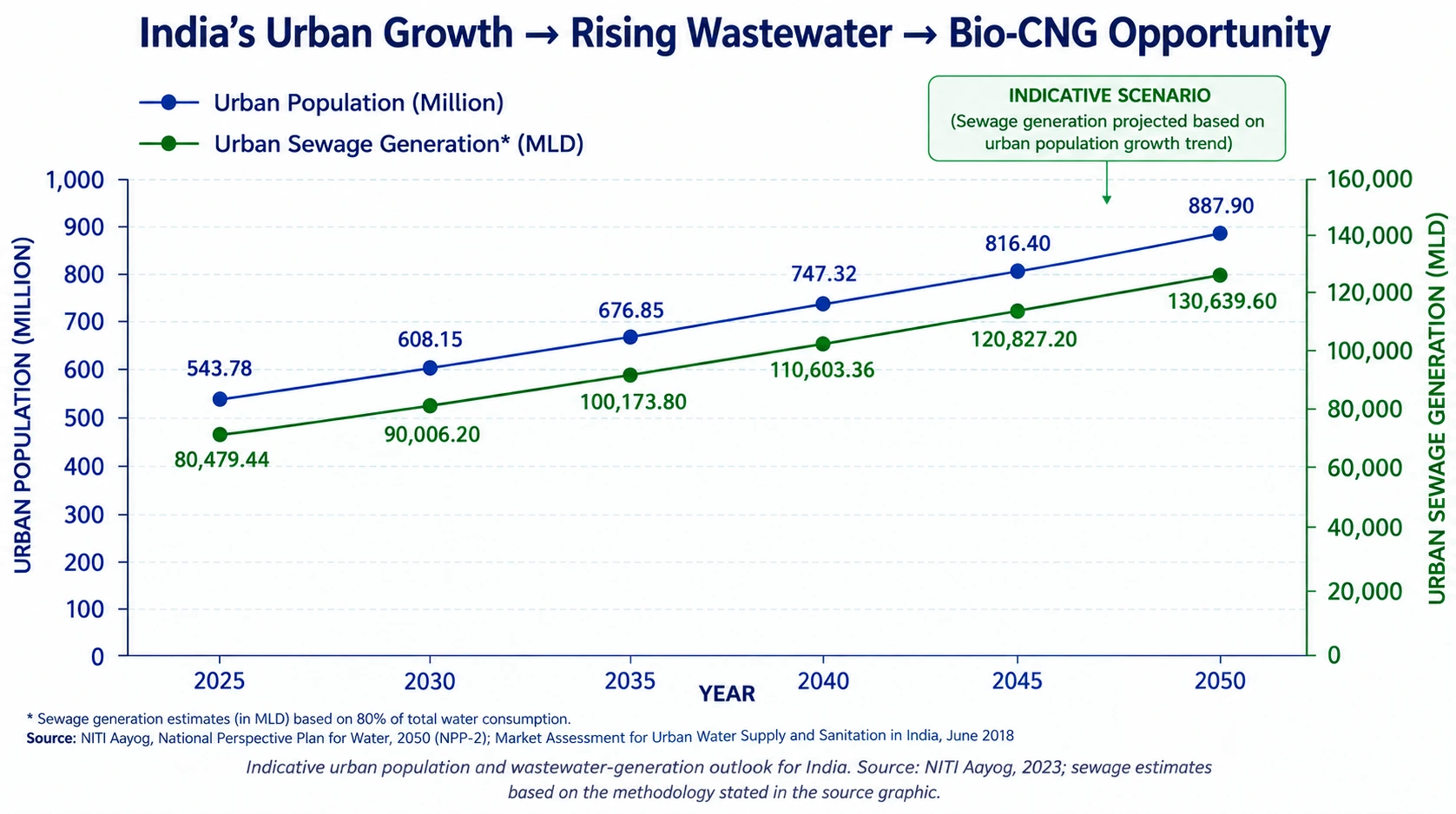
By converting biogas from wastewater treatment into a higher-value renewable fuel, an STP can evolve from a conventional treatment facility into an integrated water-and-energy recovery asset.
How Wastewater Becomes Compressed Bio-Gas
The wastewater-to-energy pathway involves five connected stages:
Sludge generation and conditioning: Primary and biological sludge from wastewater treatment is collected, thickened and prepared for digestion.
Anaerobic digestion: Microorganisms break down biodegradable organic matter in oxygen-free digesters, producing methane-rich raw biogas.
Gas cleaning: Hydrogen sulphide, moisture and trace contaminants are removed to protect downstream equipment and meet quality requirements.
Biogas upgrading: Carbon dioxide is separated using a suitable biogas upgrading technology, increasing the methane concentration.
Compression and utilisation: The upgraded biomethane is compressed and prepared for use as vehicle fuel, industrial fuel or for injection into an authorized gas network.
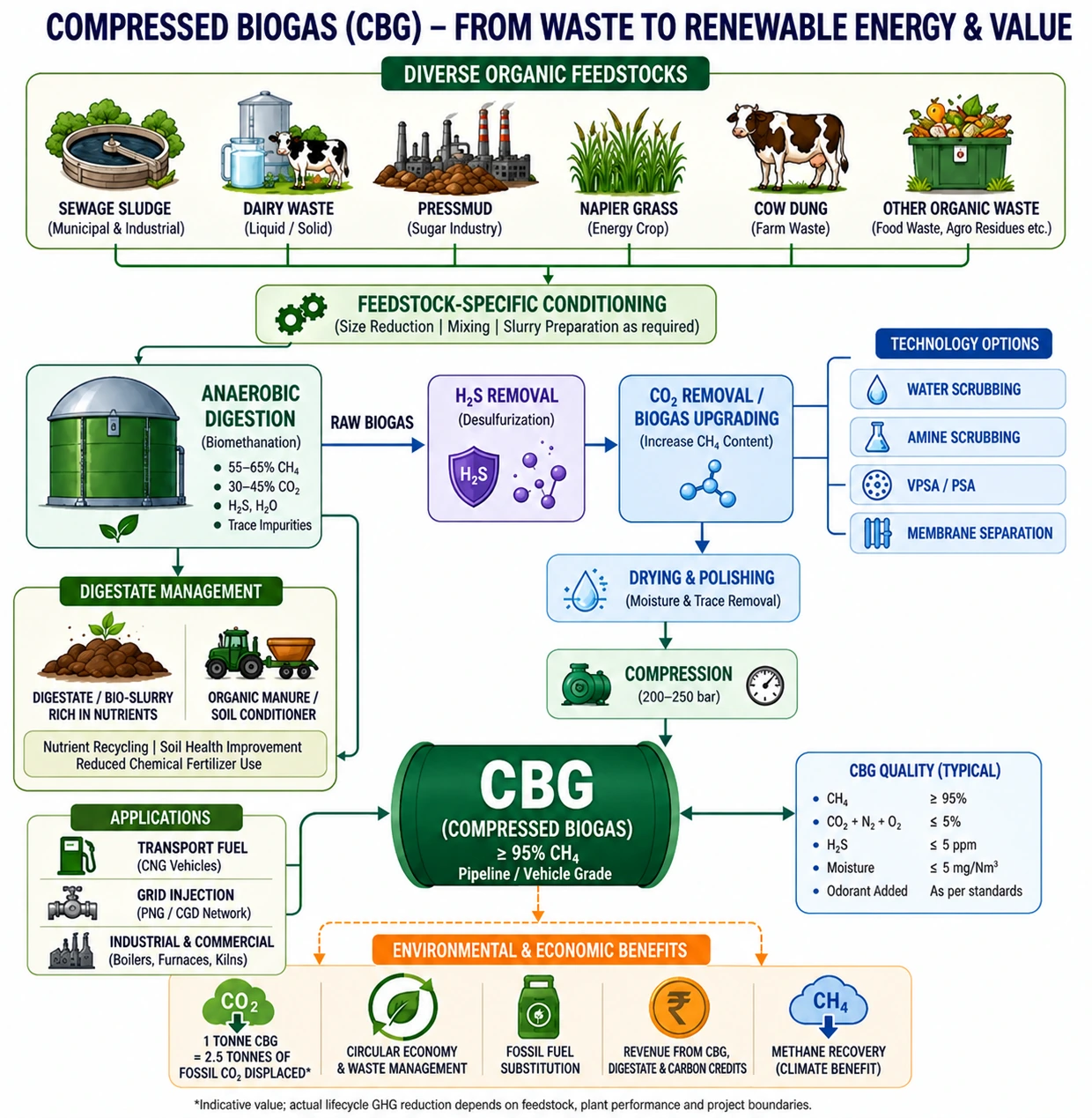
Indicative Bio-CNG production pathway from organic feedstocks. Actual configuration and output depend on feedstock, gas quality requirements and project conditions.
What Determines Bio-CNG Output and Project Viability?
The quantity and quality of Bio-CNG from sewage sludge depend on several factors: sludge availability, total and volatile solids, biodegradability, digester performance, methane concentration and overall gas recovery. Stable plant operation and consistent feedstock characteristics are essential.
Technology selection must consider the required gas quality, plant capacity, energy consumption, reliability, operating conditions and lifecycle economics. A technically efficient plant may still be commercially weak if gas offtake, financing, operating costs or feedstock security are not addressed early.
This is why Bio-CNG projects require an integrated evaluation covering feedstock assessment, process design, capital expenditure, operating expenditure, gas utilisation and project delivery structure. Depending on the context, projects may be developed through EPC, BOO, BOT, BOOT, HAM or other public-private partnership models.
Beyond Wastewater: A Wider Feedstock Opportunity
The Bio-CNG opportunity extends beyond STPs. Press mud, cattle dung, food waste, agricultural residues and industrial organic waste can also be used for biomethanation. In some projects, co-digestion can improve feedstock utilisation and gas yield, provided the input mix, logistics and treatment process are carefully managed.
India’s policy ecosystem has supported waste-to-energy projects producing biogas and Bio-CNG from urban, industrial and agricultural wastes and residues. Initiatives such as SATAT and GOBARdhan have also helped strengthen the market framework for cleaner, domestically produced gas.
Bio-CNG, Circularity and Climate Action
The environmental value of Bio-CNG goes beyond replacing conventional fuel. Capturing and utilising biogas reduces the risk of uncontrolled methane emissions, while the resulting Bio-CNG can displace fossil-based natural gas in suitable applications.
The process can also support better management of digestate. Where quality and regulatory requirements are met, digestate may be processed for beneficial use, supporting nutrient recovery and reducing residual waste. Together, these outcomes advance the circular economy in wastewater treatment by recovering water, energy and potentially nutrients from the same system.
Dhanush S
Executive | Specialist - Global Business Development